

Four Republican states to assist Homeland Security in accessing driver's license records
- Last update: 3 days ago
- 4 min read
- 13 Views
- POLITICS
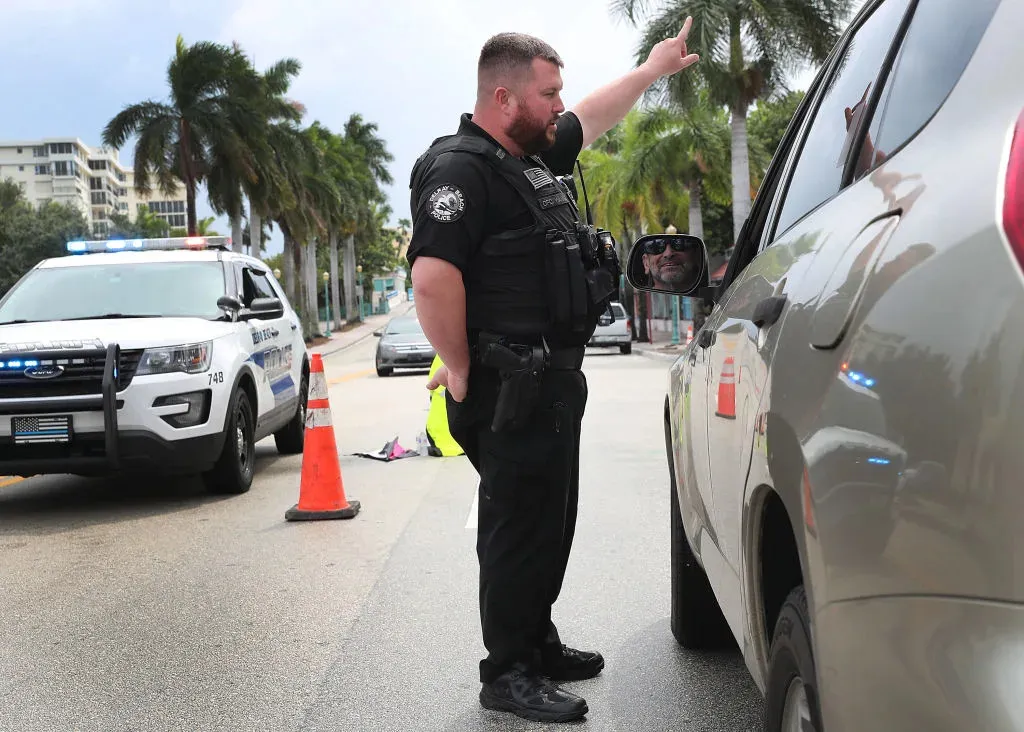
Officials in Florida, Indiana, Iowa, and Ohio have committed to assist the Trump administration in accessing state drivers license records through a national law enforcement network. The move is part of an ongoing effort to identify alleged noncitizen voters.
The administration had sought access to these records as recently as October. The commitment from the four states comes as part of a settlement in a federal lawsuit originally filed last year by these states, claiming the Biden administration was not adequately supporting voter eligibility verification.
The settlement between the states and the Department of Homeland Security (DHS) requires continued development of the Systematic Alien Verification for Entitlements (SAVE) program. SAVE, originally designed to verify the immigration status of individuals applying for government benefits, has been expanded to analyze millions of state voter records for potential noncitizen registrations.
Access to the National Law Enforcement Telecommunications System
In return, the states agreed to facilitate DHSs access to the National Law Enforcement Telecommunications System (Nlets), a network that allows law enforcement agencies to search drivers license records across state lines. Nlets, a nonprofit organization, manages what information states make available and which agencies can access it.
The Trump administration and some Republican officials have promoted the expanded SAVE program as a tool to detect potential noncitizen voters. Critics, including Democrats, argue the program could create a massive federal database of U.S. residents that might be misused for political purposes.
Federal notices have confirmed the plan to connect SAVE with Nlets. The program will use drivers license numbers and state ID information to confirm identities more efficiently, avoiding the need to query all 50 state databases individually.
Settlement Timeline and Implementation
Under the agreement, within 90 days, the four states may provide 1,000 randomly selected drivers license records to DHS to support SAVEs quality verification process. The states will also make best efforts to help DHS obtain full access to state drivers license records through Nlets and state agencies. The scope of this accesswhether limited to the four states or nationwideremains unclear.
The settlement may encourage other Republican-led states to provide access to license data in the future. Homeland Securitys goal is to incorporate state drivers license information into SAVEs broader citizenship verification efforts.
Reactions and Concerns
David Becker, executive director of the nonpartisan Center for Election Innovation & Research, questioned the purpose of DHS obtaining full access to driver records in an election context. Iowa Secretary of State Paul Pate described the settlement as a measure to protect election integrity, noting that SAVE provides critical information to ensure only eligible voters are registered.
Earlier this year, Iowa used SAVE data to identify 2,176 registered voters who had reported noncitizen status to government agencies. Of these, 277 were confirmed as noncitizens. Other officials, such as Minnesota Secretary of State Steve Simon, raised concerns about the combination of sensitive data, including drivers license numbers, Social Security numbers, and dates of birth, being used in ways that remain uncertain.
The Justice Department has also sought unredacted voter rolls from states and is sharing this data with DHS. Lawsuits remain pending against several Democratic-led states that have resisted providing voter information.
Opposition from State Officials
Twelve state secretaries of state, representing California, Connecticut, Massachusetts, Maine, Michigan, Minnesota, New Jersey, New Mexico, Oregon, Rhode Island, Vermont, and Washington, criticized the SAVE overhaul. They argued that it could undermine election security by allowing the federal government to collect and redistribute sensitive voter data nationwide.
The settlement seeks to make the SAVE modifications legally binding, with a federal court retaining jurisdiction for 20 years. However, experts suggest a future administration could still reverse the programs changes.
Iowa Capital Dispatch reporter Robin Opsahl and Stateline reporter Jonathan Shorman contributed to this report.
Author: Sophia Brooks
Share
Amid conflict and disagreements, Mike Johnson's political future is questioned again
29 seconds ago 2 min read POLITICS

Lawmakers briefed on alarming double-tap strike
1 minutes ago 3 min read POLITICS

Innocent Afghans Face Broad Punishment After Deadly Attack
3 minutes ago 3 min read POLITICS

Implications for Maine from Superfund cuts and delays in PFAS cleanup
4 minutes ago 3 min read POLITICS

Patel accuses Biden of withholding evidence in January 6 pipe bomb case
5 minutes ago 2 min read POLITICS
Pete Hegseth Proudly Talks About Bombing Another Boat Amid Growing Outrage
7 minutes ago 2 min read POLITICS

Exploring the political factors behind Netanyahu's pardon campaign
10 minutes ago 4 min read POLITICS

Opinion - Trump's quotes that are perfect for Democratic midterm election ads
12 minutes ago 2 min read POLITICS

Nigeria affected by repercussions from the US
13 minutes ago 2 min read POLITICS

Trump Engages New Architect for White House Ballroom Following Disagreements About Its Design
14 minutes ago 2 min read POLITICS