

New Hampshire Republicans face challenges in the Trump Era
- Last update: 2 days ago
- 4 min read
- 627 Views
- POLITICS
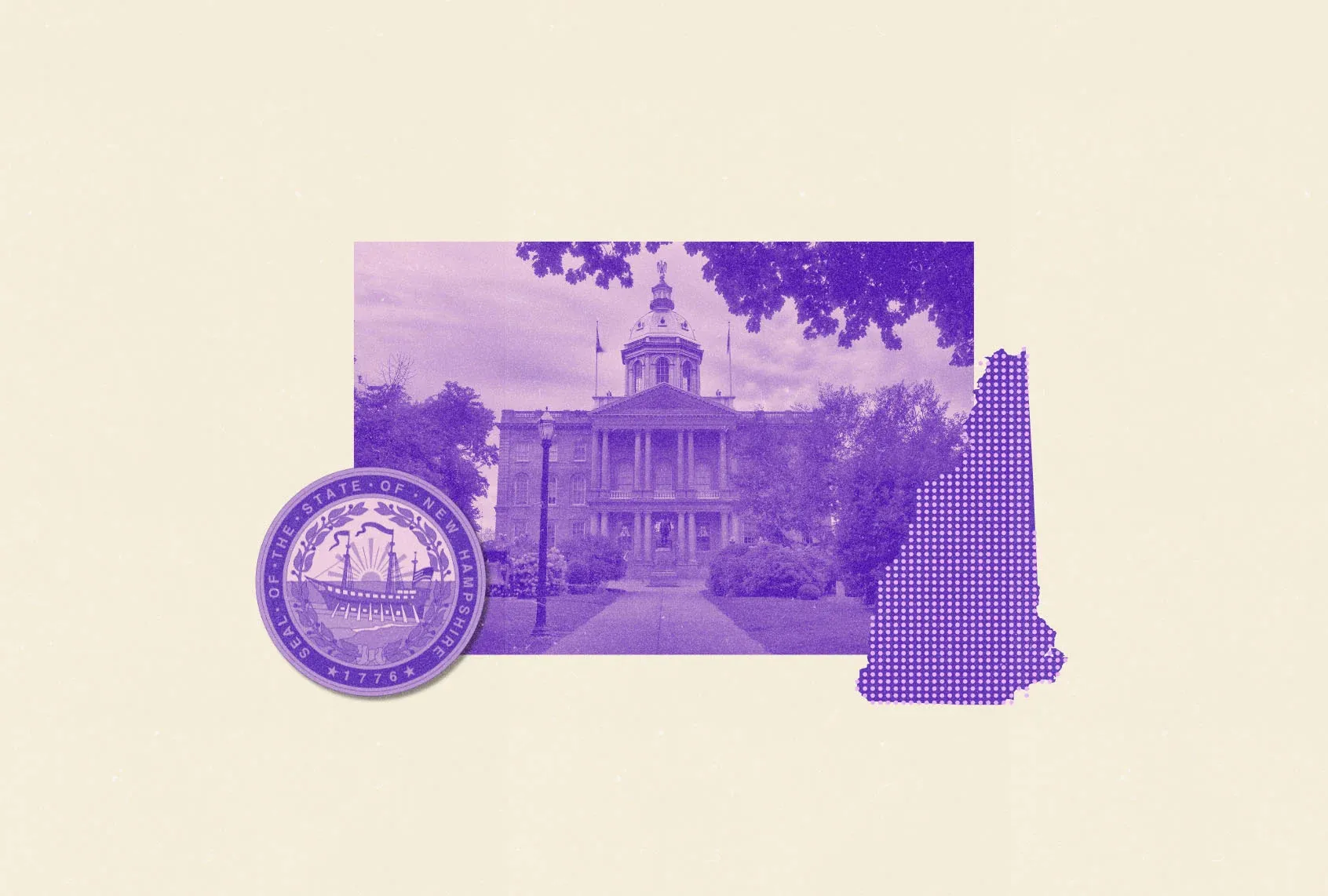
In a political climate deeply divided along partisan lines, the notion of a genuinely moderate or purple faction may seem increasingly improbable. States that swing between parties in different elections, like Arizona and Wisconsin, remain rare examples of a flexible electorate that votes for candidates rather than party loyalty. New Hampshire is one such statea small but influential player with just three electoral votes and roughly 1.4 million residents.
Despite its modest size, New Hampshire carries weight in national politics. It is the most Republican-leaning state in predominantly liberal New England, yet it has an all-Democratic federal delegation, while its state legislature is controlled by conservatives. The state often leans Democratic in general elections, but margins are tight, and state-level races remain competitive. Historically, New Hampshire has embraced moderation, but the rise of MAGA influence has begun to challenge that balance.
Andrew Smith, director of the University of New Hampshire Survey Center, noted that Trumps 2024 victory encouraged moderates in the state to stay quiet. Were in a little bit of a Trumpian moment that has divided the state, he said. In 2024, MAGA-aligned candidates saw significant support among Republicans in New Hampshire. While they did not secure federal positions, state offices shifted to the right, with officials willing to temper their views to align with Trumps base. Smith describes this as a real shift in the state Republican Party, signaling the near disappearance of moderate influence.
Smith highlighted the last major effort of never-Trump Republicans in 2024, backing Nikki Haley, but emphasized that voters gravitate toward perceived winners. Despite Kamala Harris winning the state by a 2.8% margin in 2024, the margin was narrower than in previous elections, reflecting the energized Republican base. Moderate voters remain, but Republican leadership is firmly Trump-oriented, Smith said, pointing to where political influence and funding now lie.
Governor Kelly Ayotte is navigating this landscape carefully. She has avoided controversial moves like redistricting, emphasizing stability during the census period, and has taken credit for securing federal education funds. Ayotte has also advanced her Commission on Government Efficiency (COGE), echoing a previous Trump administration initiative. On contentious federal decisions, like the retraction of public health funding, Ayotte expressed disagreement but offered measured understanding.
Dante Scala, a political science professor at the University of New Hampshire, describes Ayottes approach as New Hampshire-first and largely independent from Trump, collaborating only when necessary. Scala notes that New Hampshire voters are socially liberal but fiscally conservative, with Independent voters outnumbering both party affiliates. New Hampshire Republicans are satisfied with Ayotte, he said, highlighting her pragmatic appeal compared to a Democratic alternative.
However, MAGA-aligned challengers loom. Corey Lewandowski, a Trump ally, has been linked to a potential gubernatorial run against Ayotte, though analysts remain skeptical of his prospects. Polling shows Ayottes approval ratings hovering near 50%, indicating she retains significant support despite the looming threat.
Beyond the governorship, a Senate seat will open in 2026 with the retirement of Democratic Senator Jeanne Shaheen. This sets the stage for a contest between moderate former Senator John E. Sununu and Trump-aligned Scott Brown. Sununu, known for his criticism of Trump, currently leads in favorability over Brown. Analysts suggest the Senate primary could be more contentious than the governors race, emphasizing the challenge for moderates to assert themselves within a Trump-influenced party.
Republican candidates in New Hampshire face a balancing act: appealing to the traditional moderate voter base while navigating the influence of Trump-aligned conservatives. Approximately 70% of state Republicans approve of Trump, leaving politicians like Sununu and Ayotte performing a careful Trump danceneither too close nor too distant from the former presidents influence.
Former New Hampshire Attorney General Thomas Rath notes the tension within the GOP: to win statewide elections, candidates must remain moderate enough for general voters but right-leaning enough to satisfy the MAGA base. Governing from the middle is the strategy, but the sustainability of this approach remains uncertain. New Hampshires political culture values independence and unpredictability, suggesting that the state may continue to resist being fully defined by Trump-aligned politics.
Author: Natalie Monroe
Share
Joe Biden Criticizes Trump's Attempt to Distort LGBTQ+ Equality Fight
13 seconds ago 2 min read POLITICS

MS NOW's Jen Psaki Ridicules Trump Allies at Pentagon Press Briefing for 'Scoops' That Are 'Simply Stenography'
4 minutes ago 2 min read POLITICS

Somali American Republican Denounces Trump's Xenophobic Attack: ‘My Children Are Not Trash’
7 minutes ago 2 min read POLITICS

First court appearance for suspect in Jan. 6 pipe bomb case
8 minutes ago 2 min read POLITICS

Recollection of Events: Ex-Miss Universe Contestant's Interaction with Donald Trump
13 minutes ago 2 min read POLITICS

GOP legislator claims Hegseth's reputation destroyed due to Signalgate and Ukraine: 'Bad judgment'
13 minutes ago 2 min read POLITICS

Important information about the Justice Department's Jeffrey Epstein files
19 minutes ago 4 min read POLITICS

Schumer announces Democrats' plan for 3-year extension of health care tax credits
19 minutes ago 2 min read POLITICS

Former House Republican Criticizes 'Illogical' Legal Argument Backing Trump Boat Strikes
26 minutes ago 2 min read POLITICS

The Supreme Court to review the most unconstitutional action taken by Trump
33 minutes ago 3 min read POLITICS