

Republicans rely on Supreme Court to rectify their own blunder.
- Last update: 2 days ago
- 3 min read
- 15 Views
- POLITICS
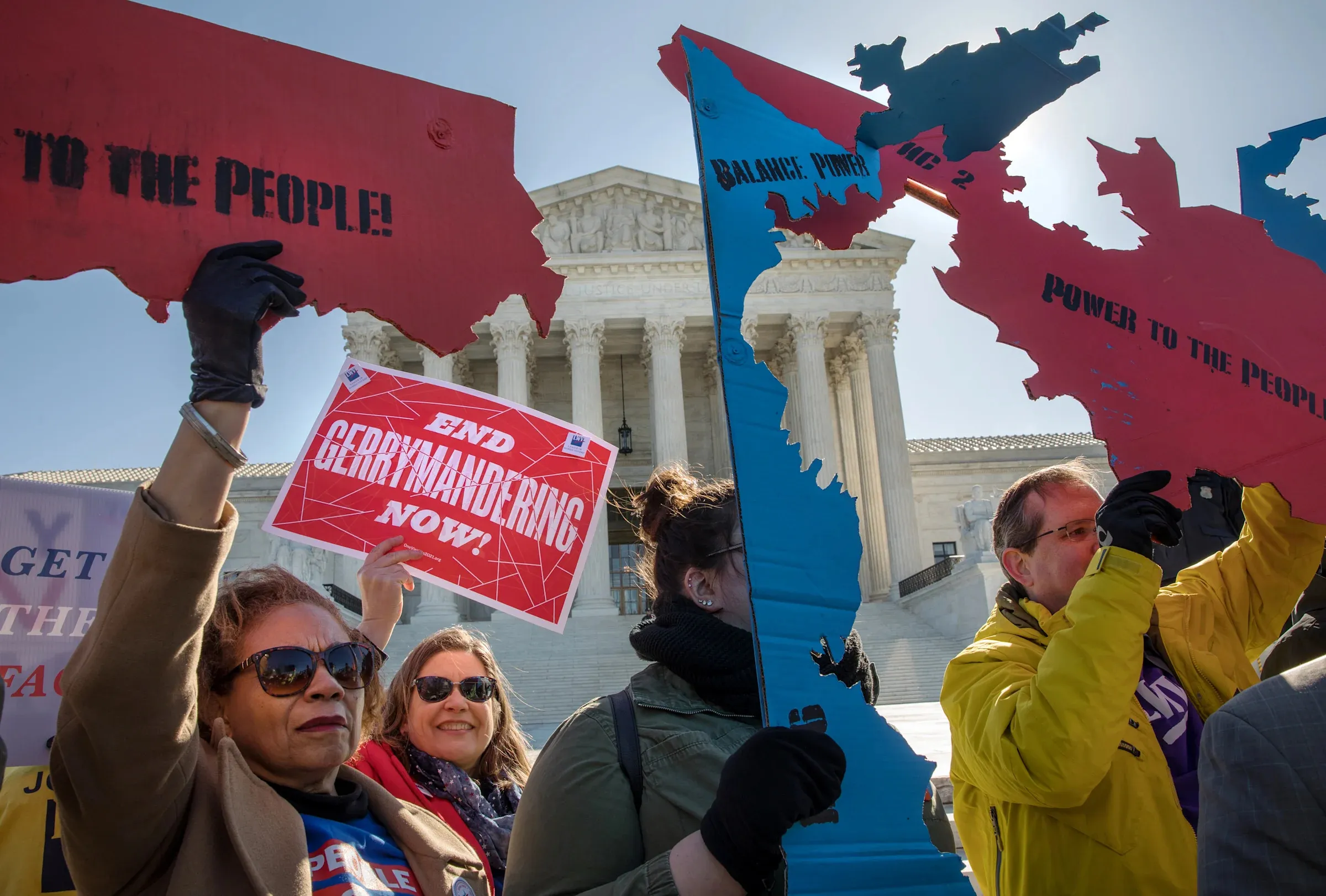
Last month, a federal court in Texas invalidated a Republican-drawn congressional map, projected to grant the GOP five additional seats in the U.S. House, citing flawed legal guidance from the Trump administration's Justice Department.
Earlier this year, Texas Republicans, following President Trumps push, redrew the states congressional districts to favor their party, prompting Democrats to pursue similar tactics in states they control. In California, voters approved a measure allowing Democrats to reshape districts, and Virginia may follow suit once Democrats gain full control of the state government this winter.
These overt attempts to manipulate congressional boundaries largely persist because of the Supreme Courts 2019 decision in Rucho v. Common Cause, which barred federal courts from intervening in partisan gerrymandering cases.
The Texas GOP map was struck down after the Justice Department sent a letter instructing the state to implement an illegal racial gerrymander. The DOJ falsely claimed that districts where white voters are a minority and two other racial groups form a majority were unlawful. Texas officials, including Governor Greg Abbott, cited the DOJs guidance as justification for redrawing districts.
Because these maps relied on race as a decisive factor, a federal court ruled them unconstitutional in League of United Latin American Citizens (LULAC) v. Abbott. Texas has now petitioned the Supreme Court to reinstate the maps. With a 6-3 Republican majority, the Court is likely to consider the request.
The case is currently on the Courts shadow docket, which handles urgent matters without full briefing or oral arguments. A ruling could come at any time.
Texass legal team presents two main arguments. First, they claim the maps were redrawn for political, not racial, reasons, and ask the Court to focus on that evidence rather than the DOJ letter. Second, more alarmingly, they argue that states should have almost unrestricted power to enact election laws without judicial review. If accepted, this could allow states to pass blatantly unconstitutional election rules without fear of court intervention.
The Texas lawyers also invoke the 2006 Purcell v. Gonzales precedent, which cautions courts against altering election procedures close to an election to prevent voter confusion. They argue that even an order issued nearly a year before the 2026 midterms disrupts election planning, although there is no constitutional requirement for Texas to hold its primaries in March. This interpretation, if upheld, could grant states the ability to implement any election law up to a year in advance without risk of being overturned.
Historical cases indicate that the Supreme Court has entertained similar arguments. In Merrill v. Milligan (2022), a five-justice majority blocked a lower court from enforcing Alabama congressional map changes nine months before the midterms, with Justices Kavanaugh and Alito emphasizing administrative planning needs. This suggests Texas may succeed in seeking a 12-month immunity from court intervention.
While it is improbable the Court will fully endorse a radical approach that could allow blatant voter disenfranchisement, the case highlights the ongoing tension between partisan gerrymandering, racial considerations, and judicial oversight of election laws.
Author: Sophia Brooks
Share

Angry Trump Supporter Condemns Trump for Racist Comments: ‘My Children Deserve Respect!’
43 seconds ago 2 min read POLITICS
Trump's national security strategy emphasizes 'fostering opposition' in Europe and reshaping US' role in the Western Hemisphere.
7 minutes ago 3 min read POLITICS
Video Shows Hegseth Lied About Crucial Detail in Boat Bombing
7 minutes ago 1 min read POLITICS
Trump, 79, Is Concerned About Reports That He's an Exhausted Elderly Man
7 minutes ago 2 min read POLITICS
Trump Warns of 'Complete and Total OBLITERATION' if Democrats Take Power
8 minutes ago 2 min read POLITICS
Bongino admits he was paid for his opinions on past pipe bomb cover-up claim
15 minutes ago 2 min read POLITICS

Lessons for Democrats from Tennessee: Aftyn Behn and Rahm Emanuel on Whole Hog Politics
18 minutes ago 3 min read POLITICS
Understanding the who and what of presidential power
19 minutes ago 3 min read POLITICS
Trump selects new architect for $300 million White House renovation project
21 minutes ago 2 min read POLITICS

Hamas officials establish new security protocols due to concerns about Israeli assassination plot
21 minutes ago 2 min read POLITICS