

Supreme Court to rule on legality of Trump's attempt to restrict birthright citizenship
- Last update: 1 hours ago
- 3 min read
- 97 Views
- POLITICS
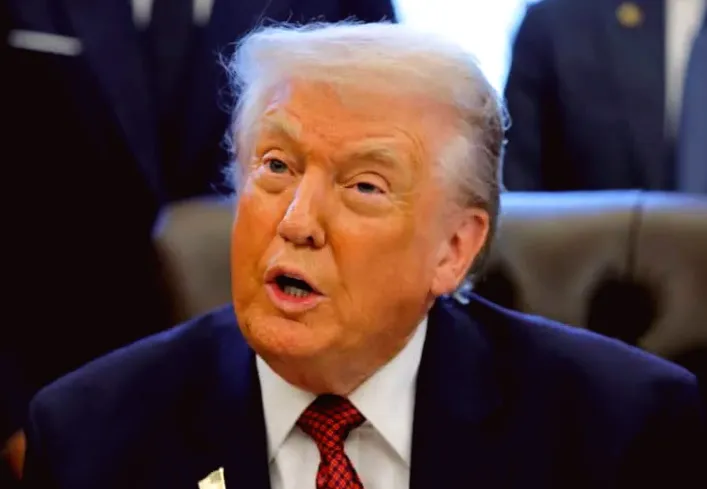
The Supreme Court has agreed to examine the legality of former President Donald Trumps attempt to restrict birthright citizenship in the United States, a move that could reshape the longstanding interpretation of the 14th Amendment.
Trumps directive instructed federal agencies not to recognize children born in the U.S. as citizens if neither parent is a U.S. citizen or lawful permanent resident. A lower court blocked the order, ruling it violated both the Constitution and federal law protecting birthright citizenship. The Justice Department has appealed that decision.
The justices are expected to hear arguments this term and issue a ruling by the end of June, although no specific date has been set. Trump issued the order on January 20 during his second term, as part of broader measures aimed at tightening immigration policies.
The administration argues that the 14th Amendment does not automatically grant citizenship to children of immigrants who are in the country illegally or temporarily, such as students or work visa holders. Officials have also raised concerns about birth tourism, where foreigners travel to the U.S. to give birth and secure citizenship for their children.
The legal challenges involve lawsuits filed by the states of Washington, Arizona, Illinois, and Oregon, and another in New Hampshire representing a nationwide class of affected individuals. In July, the 9th U.S. Circuit Court of Appeals sided with the states, and a New Hampshire federal judge allowed the class-action suit to proceed, blocking Trumps order nationwide.
The Supreme Court has decided to focus on the class-action case. The 14th Amendment, ratified in 1868 after the Civil War, grants citizenship to all persons born or naturalized in the United States, and subject to the jurisdiction thereof. The administration contends that citizenship should only apply to children whose parents have primary allegiance to the U.S., meaning lawful permanent residents or citizens.
Opponents point to the 1898 Supreme Court case United States v. Wong Kim Ark, which established that children born in the U.S. to non-citizen parents are entitled to citizenship. They also cite federal laws from 1940 and the Immigration and Nationality Act of 1952, which codified birthright citizenship.
Earlier this year, the Supreme Court addressed a related issue when it limited the scope of nationwide injunctions issued by lower courts, without resolving the constitutionality of Trumps directive. Courts may still grant broad relief to states or individual plaintiffs through class-action suits.
Throughout the year, the Supreme Court has allowed several Trump-era immigration policies to take effect despite lower court challenges, including revoking temporary protections for migrants, deportations, and enforcement raids within the U.S.
Author: Connor Blake
Share

Interpretation of one phrase will determine Supreme Court's decision on birthright citizenship
30 minutes ago 3 min read BUSINESS
The Supreme Court to review the most unconstitutional action taken by Trump
48 minutes ago 3 min read POLITICS
Supreme Court to consider case on birthright citizenship
52 minutes ago 2 min read POLITICS
Supreme Court to determine if Trump has the power to limit birthright citizenship
1 hours ago 3 min read POLITICS
Trump's executive order on birthright citizenship goes to the Supreme Court
1 hours ago 2 min read POLITICS
Supreme Court Allows Trump to Move Closer to Ending Birthright Citizenship
1 hours ago 2 min read POLITICS
US Supreme Court to consider Trump's attempt to eliminate birthright citizenship
2 hours ago 2 min read POLITICS
Supreme Court to review Trump's challenge to birthright citizenship
2 hours ago 3 min read POLITICS
Supreme Court to Finally Hear Birthright Citizenship Case
2 hours ago 2 min read POLITICS
US Supreme Court to Determine Legality of Trump's Birthright Citizenship Order
2 hours ago 2 min read POLITICS