

Trump shifts attention to legal immigration following National Guard shooting
- Last update: 5 days ago
- 4 min read
- 11 Views
- POLITICS
By Ted Hesson, Julia Harte, and Kristina Cooke
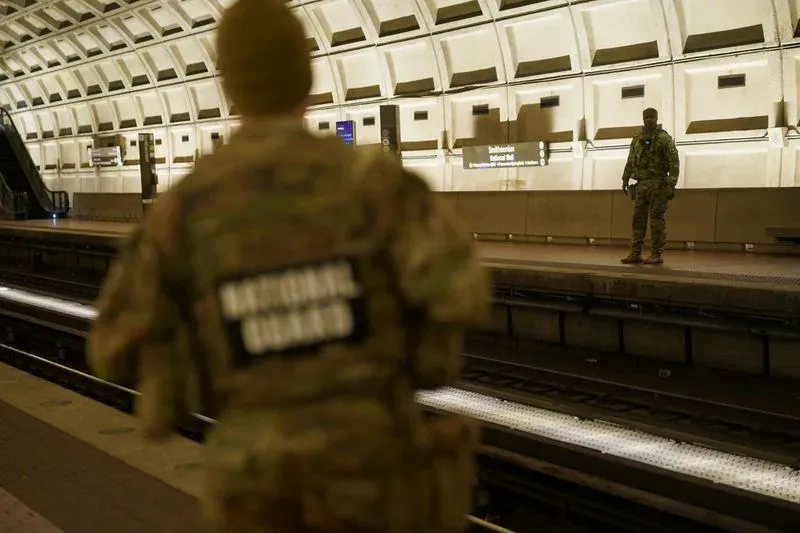
WASHINGTON U.S. President Donald Trump is taking steps to tighten legal immigration after an Afghan national was accused of attacking National Guard personnel. This initiative mirrors restrictions from his first term and could encounter similar legal obstacles.
Authorities reported that Rahmanullah Lakanwal opened fire on National Guard members, resulting in one death and leaving another critically injured. In response, Trump paused the processing of Afghan immigration applications, ordered a review of asylum approvals from the previous administration, and indicated plans to expand screening under his travel ban for 19 countries.
Since his return to the presidency in January, Trump has prioritized immigration enforcement, deploying federal agents to key cities and turning away asylum seekers at the U.S.-Mexico border. While his administration has highlighted deportations, less attention has been paid to reshaping legal immigration.
The recent measures suggest a renewed focus on legal immigration framed as a national security concern, while criticizing former President Joe Bidens policies. Some actions, such as halting Afghan immigration applications, are new, whereas others build upon policies from Trumps 20172021 administration.
Doug Rand, former senior adviser at U.S. Citizenship and Immigration Services under Biden, said, "They are likely accelerating plans they've had for some time, which dont necessarily make us safer."
Public and Political Reactions
Critics argue that the administration is using a single violent incident to unfairly target Afghan and other immigrant communities labeled as security risks. AfghanEvac, a coalition supporting Afghan immigrants, stated, "This violent act does not represent the Afghan community, which continues to contribute significantly in the U.S. and undergoes rigorous vetting."
Republican Representative Mike Lawler of New York acknowledged gaps in refugee vetting under Biden but emphasized, "We must ensure thorough screening, but we cannot judge every Afghan who assisted U.S. forces during the war."
Jessica Vaughan, policy director at the Center for Immigration Studies, highlighted challenges in vetting individuals from countries with limited or unreliable data or active terror threats, stating, "We must exercise greater caution with applicants from these regions."
Impact on Public Opinion
Trumps focus on immigration enforcement has faced backlash, with polls showing a decline in public approval. Reuters/Ipsos reported a drop to 41% approval in mid-November from 50% in March, coinciding with the deployment of masked federal immigration agents in U.S. cities.
Government Actions and Legal Concerns
In recent days, Trump suggested sweeping changes to legal immigration on social media, but agencies have so far implemented more limited measures. Trump announced on Truth Social a "permanent pause" on migration from "Third World Countries," with the Department of Homeland Security pointing to the 19 nations under the existing travel ban, including Afghanistan.
USCIS Director Joe Edlow ordered a "comprehensive reexamination" of all Green Card holders from countries of concern, focusing on pending or future applications. The Department of Homeland Security also began reviewing all asylum cases approved during Bidens tenure.
Michael Valverde, former USCIS associate director, noted that a broad reopening of hundreds of thousands of cases would be unprecedented and likely cause significant delays.
Trump further stated he would revoke federal benefits for non-citizens, strip citizenship from those "undermining domestic tranquility," and deport immigrants deemed "incompatible with Western civilization." Experts like Muzaffar Chishti of the Migration Policy Institute say such measures would face immediate legal challenges, citing Supreme Court precedent protecting lawful residents.
The administration has increased attention on denaturalization, but deporting immigrants solely based on cultural compatibility is largely untested and would likely encounter court opposition. White House spokeswoman Abigail Jackson accused Democrats of obstructing efforts to remove potential threats, while Democrats argue the crackdown has harmed non-criminal immigrants and divided families.
(Reporting by Ted Hesson in Washington; Julia Harte in New York City; Kristina Cooke in San Francisco; additional reporting by Ismail Shakil and Nate Raymond in Boston; Editing by Donna Bryson and Deepa Babington)
Author: Sophia Brooks
Share

President Trump awarded inaugural Fifa Peace Prize
7 seconds ago 2 min read POLITICS

Donald Trump Receives New FIFA Peace Prize at World Cup Draw, as Predicted
3 minutes ago 2 min read POLITICS
Pipe bomb suspect claims he was influenced by 2020 election conspiracy theories
5 minutes ago 2 min read POLITICS

'Grow a Backbone!' Trump Border Czar Tom Homan Clashes with Heckler Accusing Him of Being a 'Traitor'
6 minutes ago 2 min read POLITICS

Mamdani announces the end of sweeps of New York City homeless encampments
7 minutes ago 2 min read POLITICS

Federal panel decides to discontinue Hepatitis B vaccinations for newborns
9 minutes ago 3 min read POLITICS

Hegseth comments on recent boat strike: 'We are here to fulfill your wishes'
12 minutes ago 2 min read POLITICS
Trump meets Mexican President Sheinbaum in person for the first time at World Cup draw
13 minutes ago 3 min read POLITICS
US panel votes to stop recommending universal hepatitis B vaccine for newborns
13 minutes ago 3 min read POLITICS
Congress blocks NCAA-supported attempt to change college sports regulations
13 minutes ago 3 min read POLITICS