

Conflict in Sudan: Updates on Humanitarian Aid, Battles, and Territory Control in November 2025
- Last update: 5 days ago
- 3 min read
- 11 Views
- WORLD
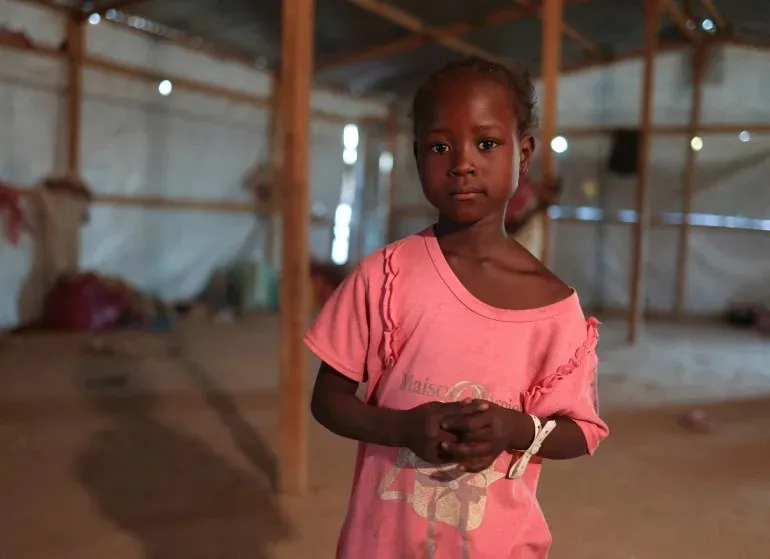
The humanitarian crisis in Sudan continues to worsen as the Sudanese Armed Forces (SAF) and the paramilitary Rapid Support Forces (RSF) remain embroiled in a brutal conflict. Both sides, led by generals accused of war crimes and atrocities, show little inclination to heed international calls for a ceasefire. Heres a summary of the latest military, humanitarian, and political developments.
In West Darfur, the RSF has tightened its grip on the region after capturing el-Fasher, the last SAF stronghold there, in late October. Meanwhile, the SAF maintains control over much of eastern and central Sudan, including the capital Khartoum and areas of Kordofan. The RSF and allied militias are advancing toward central Kordofan, targeting strategic cities such as Babnusa and el-Obeid. These locations are militarily significant for access to Khartoum and economically valuable due to agriculture, livestock, and petroleum resources.
In mid-November, SAF troops celebrated the capture of Kazqil and Um Dam Haj Ahmed in North Kordofan, holding territory despite international calls for a ceasefire aimed at freezing frontlines.
Reports from Darfur reveal widespread atrocities committed by RSF forces after taking el-Fasher. Eyewitnesses and aid agencies report mass killings, sexual violence against women and girls, and hostage-taking for ransom. Thousands fled el-Fasher to nearby areas like Tawila, while many others crossed into Chad, where humanitarian conditions are also critical amid dwindling UN resources. Satellite imagery shows the RSF systematically burning and burying bodies in mass graves, described by a Sudanese medical NGO as evidence of genocide.
The Integrated Food Security Phase Classification (IPC) in early November confirmed famine in el-Fasher and Kadugli in South Kordofan. The UN warns that 20 additional locations in Darfur and Kordofan face severe famine risk, with aid largely blocked. Amy Pope, director general of the UNs International Organization for Migration, highlighted that Sudan has the worlds largest displacement crisis, disproportionately affecting women and children, with nearly 14 million people internally displaced or fleeing to neighboring nations.
The so-called Quadcomprising the United States, Saudi Arabia, Egypt, and the UAEhas proposed a ceasefire with a roadmap toward civilian rule. Fighting continues despite the RSF claiming to accept the plan, while the SAF rejects it. On November 6, the RSF announced its acceptance, and on November 26, commander Mohamed Hamdan Dagalo (Hemedti) declared a unilateral three-month humanitarian truce, although attacks persisted.
Army chief Abdel Fattah al-Burhan publicly rejected the Quad initiative, criticizing it for undermining the military and maintaining the RSF in its positions. He also questioned the UAEs credibility, citing prior support for rebel groups, while Abu Dhabi denies providing arms or funds to the RSF. US President Donald Trump pledged cooperation and coordination to resolve the conflict following a request by Saudi Crown Prince Mohammed bin Salman. Senior US and UAE officials held a joint press conference in Abu Dhabi to promote the ceasefire plan.
Author: Sophia Brooks
Share

Putin and Modi agree to strengthen trade relations during official visit
1 minutes ago 1 min read WORLD

Funding allocated for crime prevention in playing fields and church
2 minutes ago 1 min read WORLD

Archaeologists Discover Eerie Warning from the Roman Empire
2 minutes ago 2 min read WORLD

Stalker sentenced for violating restraining order
7 minutes ago 1 min read WORLD

US reevaluating relationship with Tanzania following violent election turmoil
8 minutes ago 2 min read WORLD
US raid reportedly resulted in death of undercover agent instead of IS official
8 minutes ago 3 min read WORLD

Legal experts' opinions on the second US strike on a boat in Venezuela
11 minutes ago 4 min read WORLD

Full support for crackdown on anti-social behavior
11 minutes ago 2 min read WORLD

ERP Seeks Matching Grant of $250,000 to Expand Anti-Poaching Air Wing
12 minutes ago 2 min read WORLD

All Populations on the Largest Continent Share a Common DNA Thread—Except for One
14 minutes ago 2 min read WORLD