

Opinion - Critical US hardware still needed for German rearmament
- Last update: 56 minutes ago
- 3 min read
- 888 Views
- WORLD
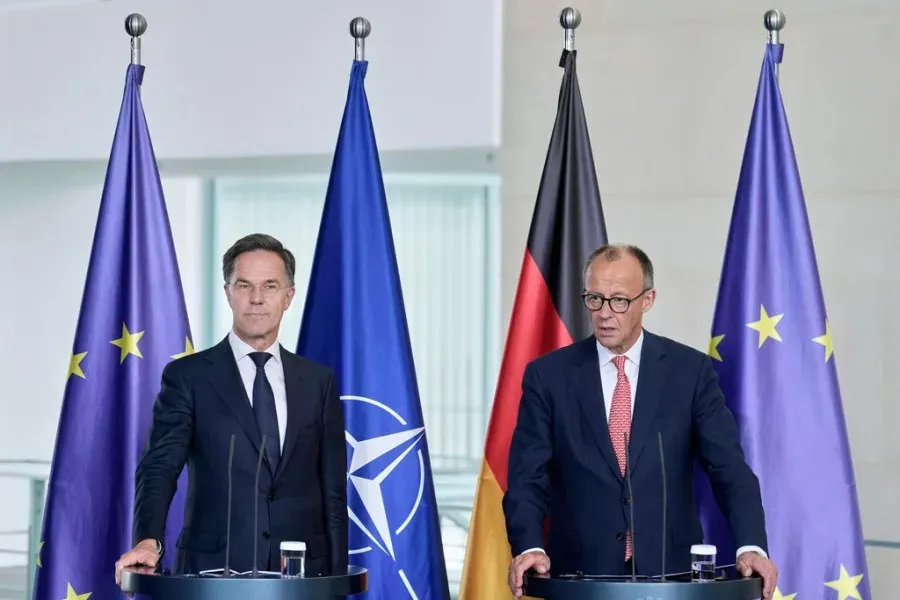
Europe is increasingly recognizing the need to strengthen its military forces amid the ongoing Russian threat. Governments across the continent are stepping up defense spending to modernize armies, navies, and air forces, understanding that preparedness is the best deterrent against conflict. As the United States reduces its direct security commitments in Europe, attention turns to Germany, the continents largest economy with 83.5 million citizens.
Since the end of the Cold War, Germany has consistently underfunded its military, prioritizing domestic issues and reunification over defense. NATO set a defense spending goal of 2 percent of GDP in 2004, formally adopted in 2006 and reaffirmed in 2014. Despite Germanys economic strength, it only reached this target last year.
The Bundeswehr faces significant challenges due to decades of underinvestment. Land forces operate at roughly 50 percent readiness, while maintenance backlogs run into billions of euros. The Luftwaffe has struggled to maintain operational aircraft, and the overall force size must grow from 182,000 to 260,000 within a decade.
Recognizing these gaps, former Chancellor Olaf Scholz created a 100 billion off-budget fund for military equipment following Russias 2022 invasion of Ukraine. His successor, Friedrich Merz, later amended Germanys Basic Law to exempt defense spending from the national debt brake. The government has since increased the military budget from 86 billion in 2025 to 108.2 billion in 2026, aiming to allocate 3.5 percent of GDP to core defense and 1.5 percent to broader security. Additional borrowing of up to 400 billion over five years will support rearmament efforts.
Germanys procurement plan, totaling 377 billion, includes both immediate acquisitions and long-term projects. A significant portion, 182 billion, is designated for domestic defense firms. Rheinmetall AG will receive 88 billion for vehicles and anti-aircraft systems, while Diehl Defence is expected to supply 17.3 billion in missiles and launchers. U.S. companies are expected to provide roughly 10 percent of the new equipment, indicating a shift toward European self-reliance.
However, the 10 percent from the U.S. includes critical systems. Germany plans to purchase 15 F-35A aircraft capable of deploying B61 Mod 12 nuclear bombs, enhancing NATOs nuclear capabilities. The Future Combat Air System, a joint program with France and Spain, faces internal disagreements and potential cancellation, which may increase Germanys dependence on the F-35.
The Bundeswehr will also acquire 400 Tomahawk Block Vb cruise missiles and three Lockheed Martin Typhon launchers, with additional Boeing P-8A Poseidon aircraft under consideration. These capabilities are central to Germanys long-range strike, nuclear, ISR (intelligence, surveillance, and reconnaissance), and missile defense capacities, all areas where U.S. technology remains crucial.
While European nations aim to reduce reliance on the U.S. and foster their own defense industries, critical dependence persists. Germanys plans illustrate the complex balance between increasing self-sufficiency and maintaining access to indispensable American systems.
Author: Gavin Porter
Share

German parliament gives approval to pension package following a rebellion in Merz's party
3 seconds ago 2 min read WORLD
Putin warns Ukraine to pull out of Donbas or be expelled
51 seconds ago 3 min read WORLD

Sea Lion Pup casually walks into a New Zealand pub as if ready to enjoy a drink
57 seconds ago 2 min read WORLD

Report: Thomas Markle, Meghan Markle's Father, Has Leg Amputated in the Philippines
2 minutes ago 2 min read WORLD

Man terrified after wallet stolen while he was sleeping
3 minutes ago 2 min read WORLD

Four dead in US drug boat incident while Hegseth faces impeachment charges
4 minutes ago 3 min read WORLD

The River Thames launches its first electric ferry
6 minutes ago 2 min read WORLD
What were the results of the meeting in Delhi for Putin and Modi?
9 minutes ago 3 min read WORLD

Leader of Israeli-backed militia in Gaza killed in family dispute
9 minutes ago 1 min read WORLD
'We are all still traumatized': Syria continues to tremble a year after Assad
10 minutes ago 4 min read WORLD