

Will Venezuela succumb to Trump? Maduro wouldn't be the first leader to collapse
- Last update: 1 hours ago
- 3 min read
- 384 Views
- WORLD
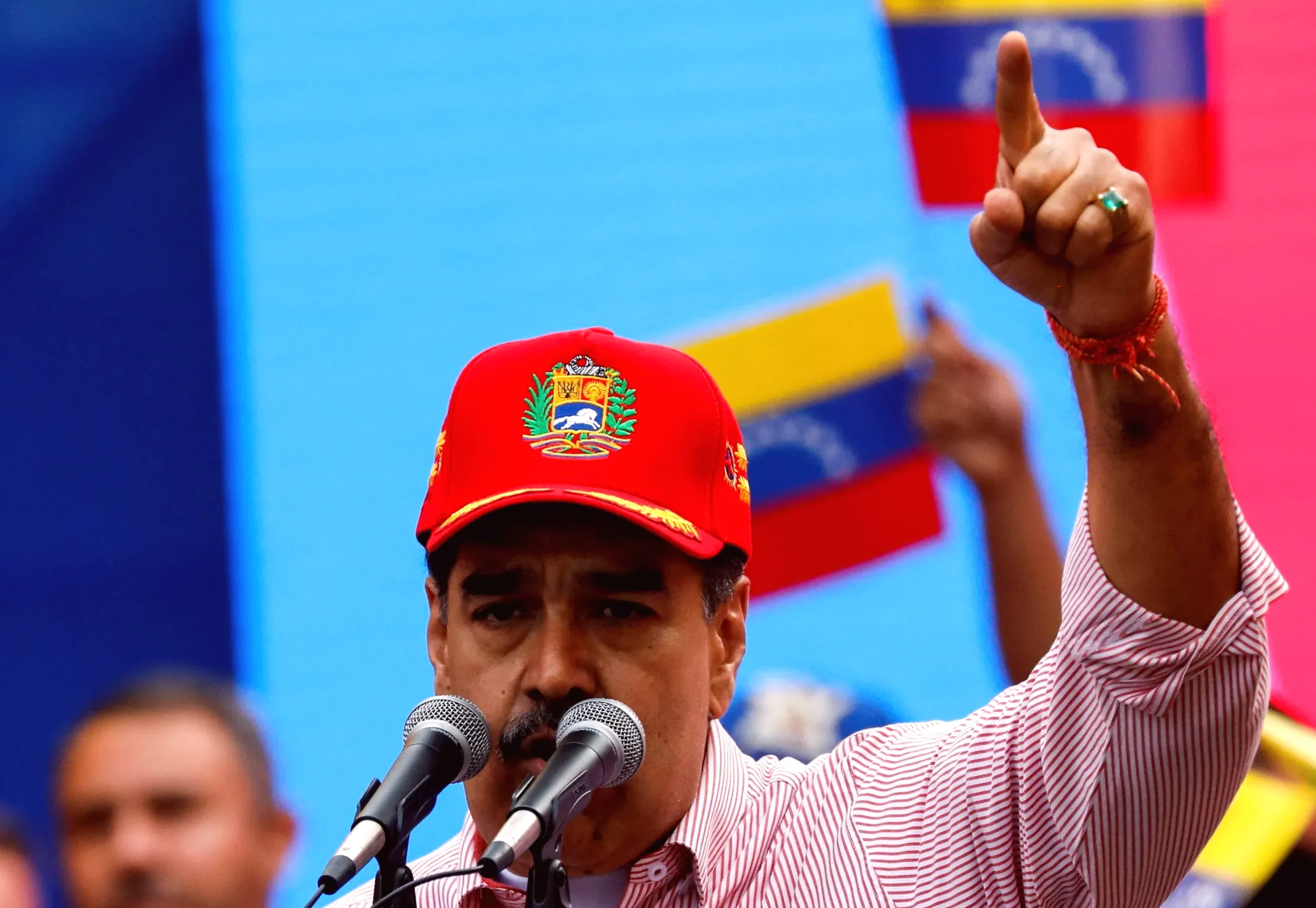
Throughout the 20th century, the United States has played a decisive role in the removal of several Latin American leaders. Figures such as Panamanian General Manuel Noriega, Chiles first socialist president Salvador Allende, and Guatemalan President Jacobo rbenz were all forced from power under U.S.-influenced circumstances. Now, Venezuelan President Nicolas Maduro may find himself in a similar position.
Under President Donald Trump, U.S. officials have intensified efforts to challenge Maduro, placing him among a historic roster of regional leaders targeted by American interventions since the early 1900s. While many of these leaders remain unfamiliar to the average American, U.S. policymakers have consistently monitored Latin America and occasionally acted to shape political outcomes.
Stephen Kinzer, an author and historian specializing in U.S.-led regime changes, told USA TODAY that U.S. involvement in Venezuela reflects a longstanding pattern: "Smaller countries near a major power have some unwritten limitations on what they can do." Official justifications for past interventions often cited the protection of U.S. business interests or citizens, but Kinzer emphasizes that the true goal was maintaining influence and control in the region.
In Maduros case, U.S. authorities describe him as the head of a drug trafficking organization and have labeled him a foreign terrorist. Maduro, however, denies any involvement in illegal drug trade.
Historically, the U.S. has justified intervention in Latin America through policies dating back to the early 1900s, such as President Theodore Roosevelts corollary to the Monroe Doctrine, which signaled Americas willingness to use force in the hemisphere. In 2025, the Trump administration reaffirmed this approach, stating its commitment to shaping a hemisphere that cooperates against narcotics and transnational crime, effectively extending the doctrines reach more than a century later.
Historical Precedents of U.S.-Backed Regime Changes
1909 Nicaragua: President Jos Santos Zelaya resigned after U.S. President Howard Taft deployed warships and Marines, following pressure from American business interests.
1911 Honduras: President Miguel Dvila was forced to resign after opposing U.S. corporate interests, paving the way for American-backed leadership and large land transfers to foreign companies.
1954 Guatemala: President Jacobo rbenz fell when the CIA orchestrated a coup in response to his land reforms targeting the United Fruit Company, employing disinformation and military threats to provoke resignation.
1973 Chile: Salvador Allende was overthrown in a coup indirectly supported by the U.S., which funded opposition groups and applied economic pressure. The military takeover led to Augusto Pinochets dictatorship, characterized by widespread human rights abuses.
Challenges Ahead for Venezuela
Analysts warn that Venezuela presents unique difficulties. Unlike Chile, which maintained democratic traditions despite the coup, Venezuela lacks a strong democratic foundation and is heavily divided among regional factions loyal to Maduro. Experts emphasize that while removing a leader like Maduro may be feasible, stabilizing the country afterward would be far more complex.
Christopher Nichols, a scholar of U.S. foreign policy, notes that recent U.S. actions continue a pattern of interventionism, allowing the country to act without needing international justification. With Trump considering further military pressure on Venezuela, the region may once again experience the consequences of external influence on domestic politics.
The historical record shows that U.S. involvement in Latin America has often led to long-term instability, even if the initial goal was regime change. Venezuela now faces the possibility of joining this pattern, as American pressure intensifies.
Author: Logan Reeves
Share

Leading Democratic Representative: 'Absolutely no reason for US to go to war with Venezuela'
6 hours ago 2 min read POLITICS

Who is a potential replacement for Nicolás Maduro?
18 hours ago 3 min read POLITICS
Rand Paul warns of Trump's boat attacks as a prelude to a potential invasion of Venezuela
1 days ago 1 min read POLITICS
Florida Venezuelans split on US military escalation
1 days ago 1 min read WORLD

Maduro's proposed conditions for surrender to Trump exposed
1 days ago 3 min read WORLD
U.S. Military Increase Sparks Concerns of Potential Conflict With Venezuela
2 days ago 4 min read WORLD
Trump's uncompromising threats indicate no intention of backing down from efforts to overthrow Maduro's regime
3 days ago 3 min read POLITICS
Summary of Trump's recent news: Tensions escalate with Venezuela after president's ultimatum to Maduro reported.
3 days ago 3 min read POLITICS
Venezuela’s Maduro lost two allies recently. Which regional partners remain?
3 days ago 3 min read WORLD
Trump faces Venezuelan dilemma as Maduro stands firm amid growing controversy over possible 'war crime'
3 days ago 3 min read POLITICS