

Senators suggest legislation to maintain current regulations on export of AI chips
- Last update: 1 hours ago
- 2 min read
- 162 Views
- BUSINESS
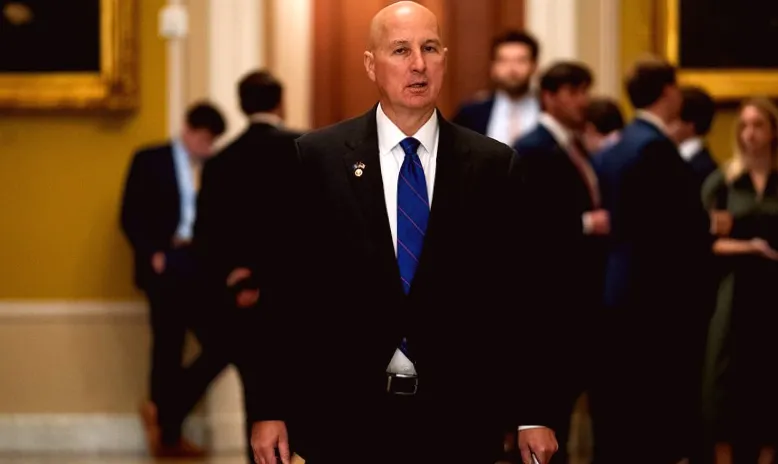
A bipartisan group of U.S. senators unveiled legislation on Thursday aimed at preserving existing restrictions on the sale of AI chips to China. The measure would prevent the Trump administration from approving exports of more advanced chips for over two years.
Named the Secure and Feasible Exports (SAFE) Chips Act, the bill is sponsored by Senators Pete Ricketts (R-Neb.) and Chris Coons (D-Del.). It directs the Secretary of Commerce to refuse export licenses for any AI chips exceeding the capabilities currently permitted for sale to China or other rival nations.
The U.S. maintains its lead in AI largely because of our control over global computing power, Ricketts said, emphasizing that restricting Beijings access to these chips is critical for national security.
The legislation allows a review of export controls after 30 months, requiring the Commerce Department to brief Congress before proposing any changes. As China accelerates efforts to catch up in AI, we cannot hand over the technological tools that define our future, Coons added.
This bill arrives as another initiative to limit chip exports to foreign adversaries has stalled in Congress. The Guaranteeing Access and Innovation for National Artificial Intelligence (GAIN AI) Act would have mandated chipmakers to prioritize U.S. companies before selling to China or other competitors. Although the GAIN AI Act passed the Senate as part of the National Defense Authorization Act in October, it is unlikely to remain in the final version due to opposition from the White House and industry leaders.
Nvidia, whose AI chips are central to the debate, opposed the GAIN AI Act, warning it could restrict global competition and address a problem that doesnt exist. CEO Jensen Huang said it was prudent for Congress to consider removing the measure from the defense bill. Huang also met with President Trump to discuss export control issues.
Author: Zoe Harrison
Share

Anthropic's Dario Amodei embarks on relationship-repair tour in DC
3 hours ago 2 min read BUSINESS

Leaving AI Regulation to States Could Suffocate AI
5 hours ago 3 min read BUSINESS

Senators introduce legislation to prevent Trump from relaxing restrictions on AI chip sales to China
8 hours ago 2 min read BUSINESS

Senators introduce bill to prevent Trump from easing restrictions on AI chip sales to China
8 hours ago 2 min read BUSINESS

Controversial: AI regulations at the state level
11 hours ago 2 min read POLITICS
Trump's proposal to prohibit state regulation of AI faces another obstacle
11 hours ago 1 min read POLITICS

Chinese drone manufacturer DJI calls on US to finish security evaluation.
12 hours ago 1 min read POLITICS
Trump Abandons Plan to Penalize Spy Agency to Prevent Angering Dictator
16 hours ago 2 min read POLITICS

China is Streamlining Rare Earth Export Licenses, Officials Say
1 days ago 1 min read WORLD
Trump’s administration to invest in a business that will financially benefit him
1 days ago 2 min read BUSINESS