

ClassNK approves spray insulation system for LNG and ammonia tanks
- HOME
- ENTERTAINMENT
- ClassNK approves spray insulation system for LNG and ammonia tanks
- Last update: 1 hours ago
- 2 min read
- 930 Views
- ENTERTAINMENT
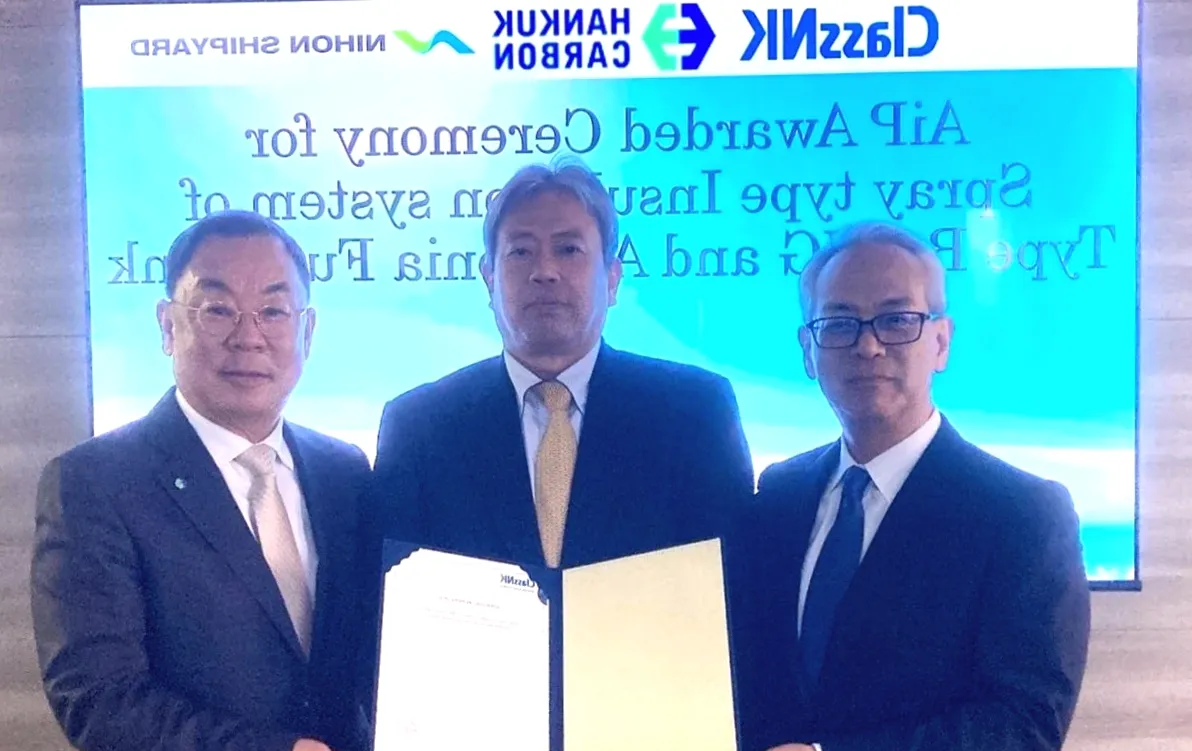
ClassNK has awarded an Approval in Principle (AiP) to Nihon Shipyard and Hankuk Carbon for their newly developed spray-form insulation system, tailored for IMO Type B tanks designed for liquefied natural gas (LNG) and ammonia fuels. The certification validates that the system meets regulatory and safety standards after a thorough assessment under ClassNKs regulations, including compliance with the IGC and IGF Codes.
The AiP follows a detailed review of the systems design and the outcomes of a demonstration mock-up test of the spray-form insulation technology. This early-stage approval, conducted before selecting a vessel, confirms that the design aligns with relevant regulations and classification requirements. Additionally, it aims to simplify future regulatory evaluations and demonstrate the technical readiness of the design.
The approval coincides with growing interest in LNG and ammonia as alternative fuels for shipping, reflecting industry efforts to lower emissions. While IMO Type C tanks have traditionally been preferred for LNG-powered ships due to their straightforward production and cost benefits, ClassNK notes an increasing shift among larger container ships and ammonia-fuelled vessels toward IMO Type B tanks, which offer enhanced cargo efficiency and more flexible installation possibilities.
Nihon Shipyard, founded in 2021 through a joint venture between Imabari Shipbuilding and Japan Marine United, focuses on commercial vessels and offshore floating structures, excluding LNG carriers. Hankuk Carbon, established in South Korea in 1984, produces advanced materials such as carbon fibre and glass fibre for multiple industrial applications.
In addition, ClassNK recently introduced the ClassNK Fleet Cost Simulation service to assist the maritime sector in adopting decarbonised fuels, supporting the industry's transition towards more sustainable operations.
Author: Benjamin Carter
Share

Michael Jackson Impersonator Advocates for Lookalikes to Have 'A Chance' in Biopics
20 seconds ago 2 min read ENTERTAINMENT

Model Pauline Jackson Sets the Coastline Ablaze in a Sun-Drenched Dream
23 seconds ago 1 min read ENTERTAINMENT

Revisiting The Big Bang Theory Season 1 Reveals a Whole New Perspective
27 seconds ago 2 min read ENTERTAINMENT

Aly Muritiba & Luca Castellani Discuss Live-Action Short Film ‘America,’ Depicting an Immigrant's Journey Towards Self-Empowerment — Behind the Scenes
1 minutes ago 3 min read ENTERTAINMENT

The Impact of 'Wonder Woman,' Featuring Lynda Carter, on Television History
2 minutes ago 2 min read ENTERTAINMENT

Mandy Moore Set to Star in New Erotic Thriller Series 'Teach Me' by Lisa Rubin Coming to Peacock and A24
2 minutes ago 2 min read ENTERTAINMENT

Miley Cyrus Laughs about Getting Her Engagement Ring on a 'Black Friday Deal' from Fiancé Maxx Morando
2 minutes ago 2 min read ENTERTAINMENT

Creator Reveals Details for Season 3 of 'Euphoria'
3 minutes ago 3 min read ENTERTAINMENT

Ice Spice Flirts in Spanish with Tokischa on Catchy Single 'Thootie'
3 minutes ago 2 min read ENTERTAINMENT

Kate Middleton's Casual Conversation with Eugene Levy Captured on Film Following His Popular Prince William Encounter
3 minutes ago 2 min read ENTERTAINMENT