

Canada's Prime Minister faces criticism for suspected reversal on climate policies
- Last update: 5 days ago
- 3 min read
- 19 Views
- POLITICS
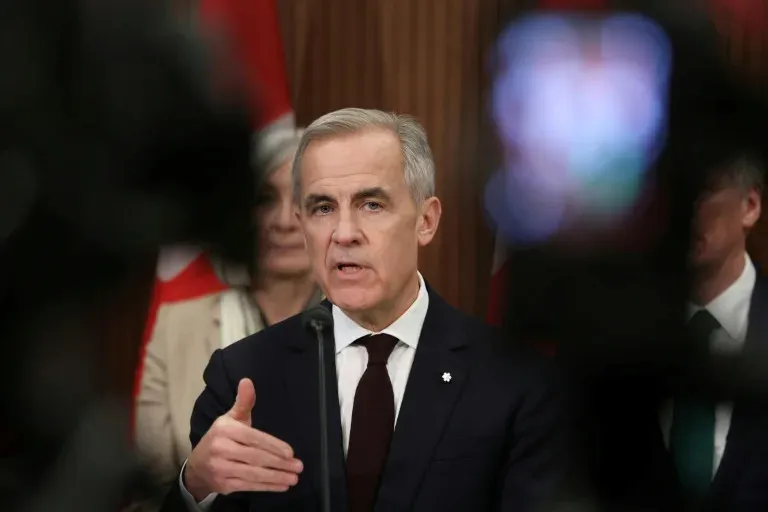
Critics argue that Canadian Prime Minister Mark Carney is abandoning efforts to combat climate change. Others maintain that he is confronting economic realities, compelled to support polluting industries crucial to an economy strained by US President Donald Trump's trade measures. What is undisputed, however, is that since taking office in March, Carney has reshaped his Liberal Party's environmental stance.
One of his first actions was to eliminate the unpopular carbon tax on individuals, introduced by former Prime Minister Justin Trudeau. He then established the Major Projects Office to accelerate initiatives aimed at strengthening Canadas economic independence, shielding the country from the repercussions of Trump's tariffs. Early initiatives included mining and natural gas projects, which environmental advocates criticized.
The most notable move came on Thursday, when Carney signed an agreement with Alberta's conservative-led provincial government to advance a new oil pipeline and increase overall oil and gas production. "Canada and Alberta are entering a partnership to build a stronger, more sustainable, and self-reliant economy for both Alberta and Canada," Carney said. "Our goal is to make Canada an energy powerhouse, reduce emissions, and diversify export markets."
This deal signals a significant shift for Carney's Liberal Party, departing from the policies that shaped Trudeaus decade in office. Alberta Premier Danielle Smith, who opposed Trudeau's environmental measures, commented that "the federal governments approach has reversed dramatically over the past year." Steven Guilbeault, a former Trudeau environment minister and member of Carneys cabinet, agreed. He resigned hours after the pipeline deal was signed, stating that he joined politics "to fight climate change," but that key green initiatives from Trudeaus government were being dismantled.
Carney, previously a central banker, has a history of working on climate issues, emphasizing market-based approaches. In 2019, he served as a UN envoy mobilizing finance for the Paris Agreement and later guided private capital at Brookfield to support climate action.
The Alberta pipeline project is still in its early stages and may not advance. However, Carneys memorandum with Alberta envisions transporting bitumen to Canadas northwest Pacific coast and constructing a large port for oil tankers. He claims expanding oil exports to Asia will reduce reliance on the unstable US market. The deal also imposes a significant industrial carbon tax on oil companies to fund cleaner energy projects, with emissions offset through carbon capture, a controversial method.
Conor Curtis, communications director at Sierra Club Canada, said there has been an "erosion of climate policy" under Carney. "A new oil pipeline is unnecessary. The world is transitioning to renewable energy," he told AFP. Conversely, Tim McMillan, former head of the Canadian Association of Petroleum Producers, argued Carney had limited options. "After a decade of project cancellations and declining GDP per capita, especially under US trade threats, Canada must focus on its strengths. Oil and gas top that list," he said.
Even Guilbeault acknowledged Carney faces a difficult situation, noting Trump's actions caused "profound disruptions" in Canadas critical economic ties. "Despite this challenging context, I still believe environmental issues must remain a top priority," he added.
Author: Sophia Brooks
Share

Joe Rogan Shares Surprising Detail About Donald Trump
4 minutes ago 2 min read POLITICS
CDC panel votes to remove recommendation for hepatitis B vaccine in newborns
7 minutes ago 3 min read POLITICS

Judge orders the release of grand jury transcripts from Epstein case in Florida
9 minutes ago 1 min read POLITICS

Ordered release of grand jury transcripts from abandoned Epstein investigation in Florida
11 minutes ago 1 min read POLITICS

RFK Jr.'s selected vaccine panel votes against recommending hepatitis B shots for newborns. Expert opinions differ.
16 minutes ago 3 min read POLITICS

Pirro criticizes Warner’s comments on DC pipe bomber case as ‘foolish’
18 minutes ago 3 min read POLITICS

'You All Believed He Was White Too!' Erick Erickson Supports Jake Tapper's Error on Suspected Pipe Bomber
20 minutes ago 2 min read POLITICS

Indiana Senate Republicans prepare for high-stakes battle over Trump-supported map
24 minutes ago 3 min read POLITICS

Virginia man who planted pipe bombs in DC on eve of Capitol riot appears in court
25 minutes ago 1 min read POLITICS

Republicans stand by Johnson as speaker despite increasing criticism and demands for new leadership
25 minutes ago 2 min read POLITICS