

Texas Governor Abbott discusses redistricting and border security at campaign tailgate
- Last update: 5 days ago
- 3 min read
- 13 Views
- POLITICS
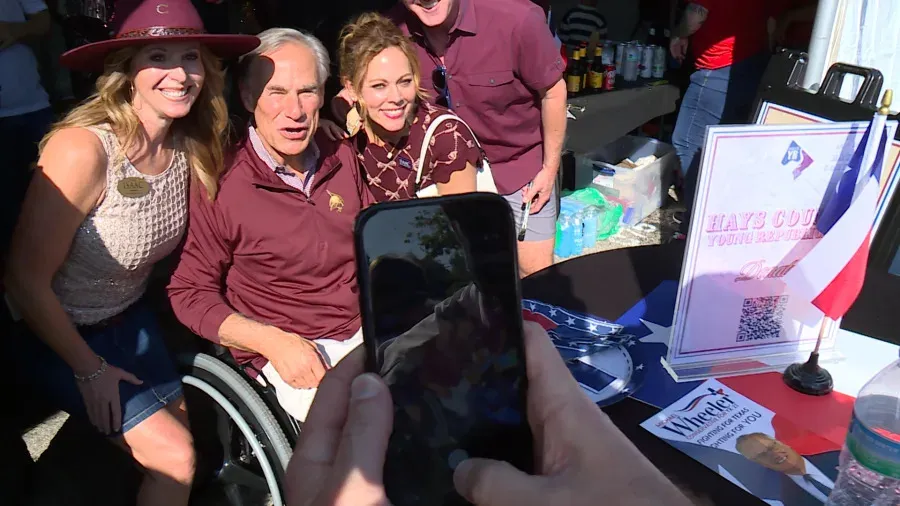
AUSTIN (Nexstar) Governor Greg Abbott, during his re-election campaign, has focused on initiatives with significant consequences for Texas residents. He emphasized a property tax relief plan and his statements have become central to the ongoing legal dispute over the states congressional redistricting maps.
At a campaign stop in San Marcos, held during a Texas State football tailgate, the Governor spoke to reporters about the district court ruling that cited his words as evidence of racial gerrymandering. With the case now before the Supreme Court, Abbott dismissed the lower court's findings, asserting that the maps were designed to favor Republican representation, not to target racial groups.
Everything was carried out correctly. The legislative intent was clear, and the legislators are the ones who voted on the maps. The Governor does not vote on these maps, so there is no racial bias, Abbott stated. He expressed confidence that the Supreme Court will uphold the maps for the upcoming elections, noting that a recent pause by the Court was encouraging.
Abbott also made headlines by labeling the Council on American-Islamic Relations (CAIR) a terrorist organization. He explained that the decision was based on historical connections to terrorism and recent praise by CAIR leadership for Hamas actions, which included the deaths of Americans. CAIR has sued the Governor, claiming his declaration is defamatory and discriminatory, while Abbott maintained it is a matter of public safety.
The Governor confirmed that Texas National Guard troops sent to Illinois in October would return before Thanksgiving. Regarding the border operation, Abbott stated Texas will continue to maintain more than 3,000 National Guard members on the border, working in coordination with federal authorities to manage immigration and security.
During the event, Abbott engaged with supporters, highlighting widespread approval for his policies on border security and property tax reductions. Supporters expressed enthusiasm for his legislative efforts.
Meanwhile, the states implementation of a law requiring Ten Commandments posters in public school classrooms has sparked debate and legal challenges. Teachers, parents, and administrators across Texas have encountered complex decisions regarding the laws enforcement. Federal courts have blocked the mandate in multiple districts, citing First Amendment violations, while other schools are moving forward with displays of donated posters.
Teachers have questioned how to navigate student inquiries and the inclusion of other religious displays. Some educators, like Gigi Cervantes in Fort Worth, resigned rather than comply, citing conflicts with students' constitutional rights. The issue has prompted lawsuits, state interventions, and ongoing public discourse on religious expression in schools.
Separately, Texas has closed the long-standing Dead Suspect Loophole, which allowed law enforcement to withhold records if a suspect died in custody. This change followed investigative reporting and legislative action to improve transparency and protect citizens right to information. Kelley Shannon of the Freedom of Information Foundation of Texas highlighted the importance of access to public records for civic accountability.
In environmental news, Texas A&M University and the Texas Department of Transportation are collaborating to protect monarch butterflies. Researchers have identified highways with high butterfly mortality and installed mesh fences to guide the insects safely over traffic. Conservation efforts have led to a near doubling of eastern monarch populations compared to the previous year.
Texas Agriculture Commissioner Sid Miller praised these initiatives, emphasizing practical, localized solutions. However, the federal government is considering rolling back protections for endangered species, creating uncertainty for future conservation. Experts like Stephanie Lopez of the National Butterfly Center stress that continued community involvement is essential to preserve monarchs and maintain ecosystem health.
Author: Sophia Brooks
Share
FBI Official Confesses to Receiving Payment for Deception Before Joining Trump's Team
3 minutes ago 1 min read POLITICS

Angry Trump Supporter Condemns Trump for Racist Comments: ‘My Children Deserve Respect!’
5 minutes ago 2 min read POLITICS

Trump's national security strategy emphasizes 'fostering opposition' in Europe and reshaping US' role in the Western Hemisphere.
12 minutes ago 3 min read POLITICS
Video Shows Hegseth Lied About Crucial Detail in Boat Bombing
12 minutes ago 1 min read POLITICS
Trump, 79, Is Concerned About Reports That He's an Exhausted Elderly Man
12 minutes ago 2 min read POLITICS

Trump Warns of 'Complete and Total OBLITERATION' if Democrats Take Power
13 minutes ago 2 min read POLITICS

Bongino admits he was paid for his opinions on past pipe bomb cover-up claim
20 minutes ago 2 min read POLITICS

Lessons for Democrats from Tennessee: Aftyn Behn and Rahm Emanuel on Whole Hog Politics
23 minutes ago 3 min read POLITICS
Understanding the who and what of presidential power
24 minutes ago 3 min read POLITICS

Trump selects new architect for $300 million White House renovation project
26 minutes ago 2 min read POLITICS