

'I witnessed them running over wounded individuals' - the harrowing flight from conflict in Sudan
- Last update: 3 days ago
- 3 min read
- 15 Views
- WORLD
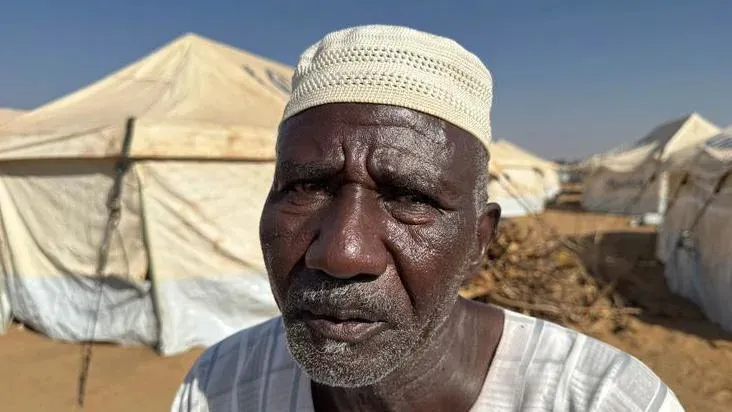
Abdulqadir Abdullah Ali, 62, sustained severe nerve damage to his leg during the prolonged siege of El-Fasher due to lack of diabetes medication. Despite walking with a heavy limp, he recalls running in terror when fighters from the Rapid Support Forces (RSF) finally overtook the western Darfur city, feeling no pain amid the chaos.
"The morning the RSF arrived, there were bullets flying everywhere and explosives detonating," he said. "People panicked, fleeing their homes in every directionfather, son, daughtereveryone running." The fall of El-Fasher, after 18 months under siege, marks a brutal chapter in Sudan's civil war.
The BBC visited a tent camp in northern Sudan, within army-controlled territory, to hear firsthand accounts from those who escaped. The RSF has been fighting Sudan's regular army since April 2023, after a power struggle escalated into open conflict. Capturing El-Fasher was a significant win for the paramilitary group, removing the army's last presence in Darfur. However, reports of mass atrocities have drawn international condemnation and intensified U.S. involvement in attempts to end the violence.
Millions have been displaced by the war, with many fleeing El-Fasher to areas such as al-Dabbah. Mr. Ali was found wandering the camp near al-Dabbah, trying to register his family for shelter. "RSF fighters shot civilians, including the elderly, with live ammunition," he said. "Some drove over people who were still alive." He described crawling, hiding, and eventually reaching the village of Gurni, a first stop for many fleeing the city.
Mohammed Abbaker Adam, a former local official, also fled El-Fasher, leaving Zamzam camp before the city fell. He described the journey north as "full of death," witnessing killings and bodies left unburied along the road. Many people ended up in camps in al-Dabbah, others in Tawila or crossing into Chad. The UN reports that fewer than half of the estimated 260,000 residents of El-Fasher have been accounted for.
Survivors report widespread sexual violence. Women in the camp recounted attacks at checkpoints and during the escape. One 19-year-old woman described fleeing with her siblings after their father, a soldier, had died and their grandmother passed away en route. The group struggled with dehydration and exhaustion, highlighting the immense dangers of the journey.
Many arrived at the camp empty-handed, having had to surrender money or possessions at checkpoints. "The RSF took everything from usmoney, phones, clothes," Mr. Adam said. Fighters reportedly forced families to transfer money before allowing them to proceed.
The RSF rejected allegations of systematic abuse, claiming these reports are part of a political campaign against them. They have released videos showing officers assisting civilians and reopening medical centers, attempting to reshape their image. Survivors, however, describe brutal treatment, especially when officers were absent.
The US has previously determined that the RSF committed genocide in Darfur. Sudanese armed forces and allied militias have also been accused of targeting civilians and indiscriminately shelling residential areas. The international community, including the U.S., continues efforts to broker a ceasefire, though for survivors in al-Dabbah, safety and stability remain uncertain.
Despite their trauma, those who escaped demonstrate resilience. Mr. Ali, focused on securing a tent for his family to rest, had little knowledge of international attention on the conflict. "We just want a place to live and recover," he said.
Additional reporting by Ismail Ali Alshaikh and Ed Habershon
Author: Sophia Brooks
Share

Ecuador's Otavalo Indigenous Community Harnesses Anime to Foster Cultural and Linguistic Pride
1 minutes ago 2 min read WORLD
Burkina Faso to reinstate death penalty for treason, terrorism, espionage
1 minutes ago 2 min read WORLD

A Navy warship mistakenly fires at US fighter jets, pilot's life flashes before his eyes.
3 minutes ago 2 min read WORLD

The last supermoon of 2025 illuminates the evening sky. Check out the pictures.
3 minutes ago 1 min read WORLD

Survey shows that Asia has the highest public trust in tax systems
4 minutes ago 2 min read WORLD

Firefighters combat fire in a barn
4 minutes ago 1 min read WORLD
World War 2 Fighters from Surprising Countries
6 minutes ago 4 min read WORLD

Mamdani and Trump Becoming Friendly Is America's 'Nightmare of the Horseshoe Theory'
9 minutes ago 2 min read WORLD

German lower house approves new voluntary military service
10 minutes ago 2 min read WORLD

Tonight's Full Moon in December 2025: What is a Supermoon and How to Witness It
12 minutes ago 1 min read WORLD