

Mysterious dead sea snakes continue to appear on Australia’s shores, leaving scientists puzzled
- Last update: 3 days ago
- 2 min read
- 41 Views
- WORLD
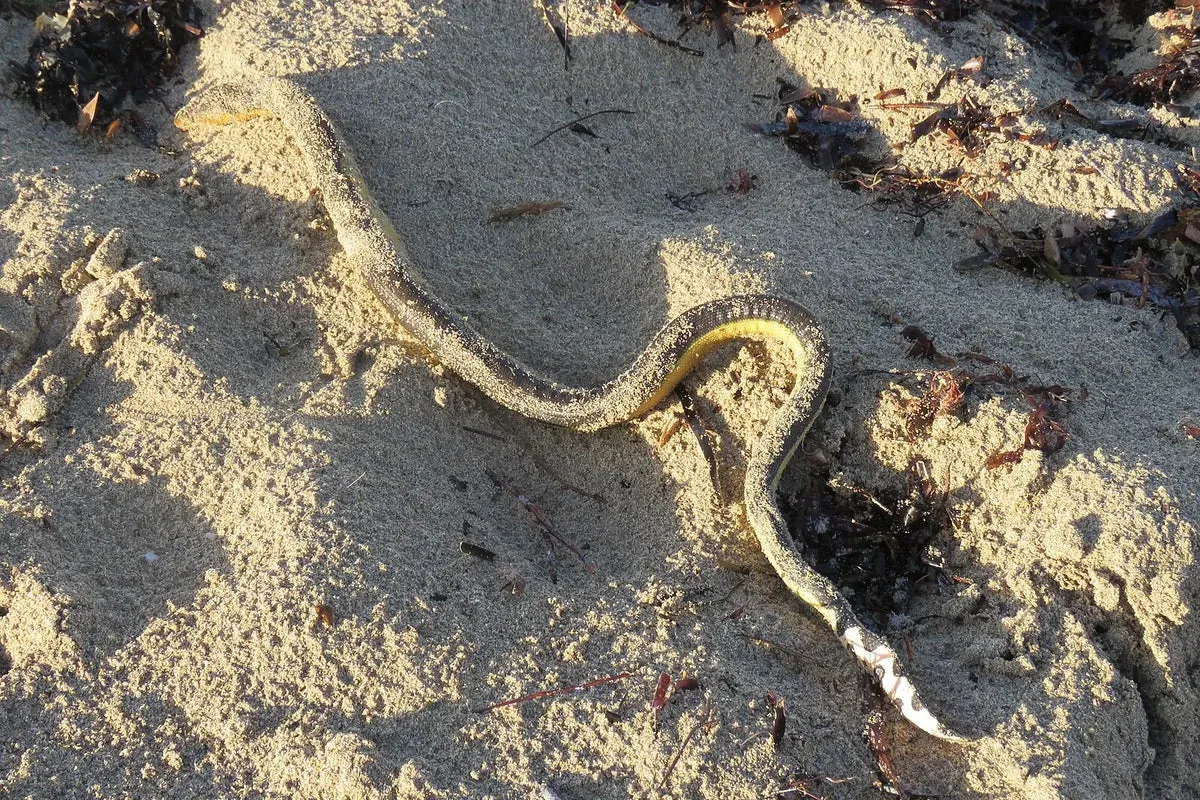
Since October, more than a dozen venomous sea snakes have been found washed up along the shores of Nanga Bay in Australia, sparking concerns about changing marine conditions. The waters of northern Australia host over 20 sea snake species, all protected, with two classified as critically endangered.
Researchers are uncertain why an unusually high number of sea snakes are appearing on beaches. The public is encouraged to document any sightings on the Australian Sea Snakes Facebook page.
Sea snake populations are in decline, but the reasons remain unclear. They are frequently caught as bycatch, stated the Australian Department of Climate Change, Energy, the Environment and Water (DCCEEW).
Blanche d'Anastasi, a sea snake researcher, asked in a Facebook post for people to report strandings in Shark Bay/Gathaagudu. Her group has already recorded over a dozen incidents of sea snakes washing ashore.
Experts warn against touching stranded sea snakes due to their potent venom and fragile structure. These snakes are aquatic with delicate tissues, bones, and joints suited for life underwater, Ms. dAnastasi explained.
Scientists continue to investigate the causes of these stranding events. Sea snakes struggle with extreme weather and can get trapped in sea grass washed ashore after cyclones, Ms. dAnastasi told ABC News. She added that true sea snakes do not normally leave the water, so strandings usually indicate injury or illness.
Historical events, like the 2010 heatwave at Shark Bay, have shown dramatic impacts on sea snake populations, with a reported 76% decline locally following the extreme temperatures. These snakes were once abundant, but their numbers dropped drastically after that heatwave, the researcher said.
Authorities also caution the public not to return stranded sea snakes to the water, as they often wash ashore again. Ms. dAnastasi emphasized, Maintain a safe distance, do not touch the snake. Their long fixed fangs can deliver venom. Report sightings with time, date, location, and behavior to the Australian Sea Snakes Facebook group.
Author: Sophia Brooks
Share

Meghan contacts estranged father following reports of surgery
17 seconds ago 2 min read WORLD
Authorities impose harsh penalties in stunning case involving large animals: 'Establishes a significant precedent'
2 minutes ago 2 min read WORLD

Report warns Israel of worst prison overcrowding crisis in history
4 minutes ago 3 min read WORLD

Satellite Interference Disrupts Space Telescope Astronomy
5 minutes ago 2 min read WORLD
Researchers claim that the DNA of maggots could transform the way death investigations are conducted
7 minutes ago 2 min read WORLD

Exploring a large sanctuary for rescued lions and tigers where they roam freely
7 minutes ago 2 min read WORLD
Ghostwriters, polo shirts, and the decline of a significant pesticide study
10 minutes ago 3 min read WORLD

Residents stranded after fire evacuations
13 minutes ago 2 min read WORLD
Trump disrupts his own DOJ's corruption case with another controversial pardon
14 minutes ago 2 min read WORLD
Exploration of deep sea mining reveals discovery of numerous new species
14 minutes ago 3 min read WORLD