

Maduro refuses to accept a peace deal imposed by force for Venezuela amid increased pressure from the US
- Last update: 3 days ago
- 3 min read
- 29 Views
- POLITICS
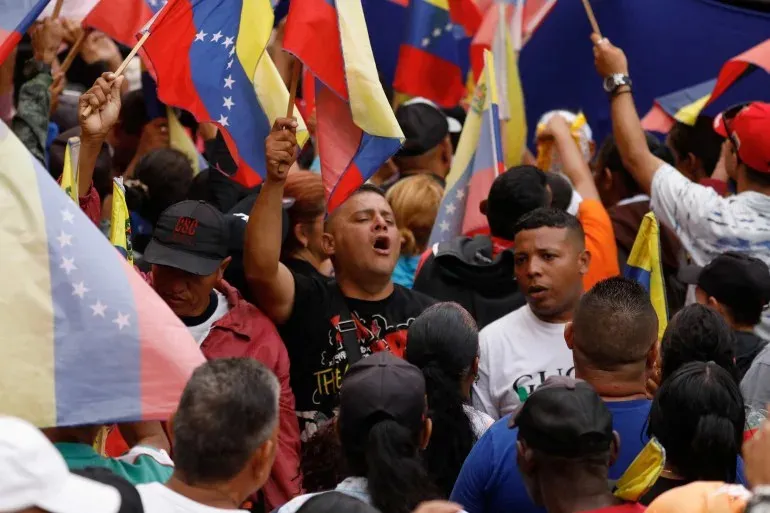
Thousands gathered in Caracas as Venezuelan President Nicolas Maduro renewed his appeal for peace and vowed absolute loyalty to the nation amid rising concerns over possible U.S. military intervention.
The demonstration on Monday coincided with reports that U.S. President Donald Trump met with senior security officials at the White House to discuss forthcoming actions regarding Venezuela.
Addressing supporters waving national flags outside the presidential palace, Maduro insisted that Venezuela sought a peace grounded in sovereignty, equality, and freedom, rejecting any form of submission. We refuse the peace of a colony or of servitude. Never slaves, never a colony! he declared.
Escalating Tensions With Washington
Washington has intensified pressure on Caracas, deploying significant military assets to the Caribbean under the pretext of an antidrug trafficking mission. Venezuelan officials argue the buildup is aimed at removing Maduro from power.
The U.S. presence reportedly includes around 15,000 troops and a major aircraft carrier group. Washington has also labeled the Cartel de los Solesa group it claims Maduro overseesas a terrorist organization. Since September, U.S. forces have conducted more than 20 strikes on suspected drug-trafficking vessels in the Caribbean and Pacific, resulting in dozens of deaths.
Analysts note that the scale of U.S. deployment far exceeds what is typically required for anti-narcotics operations. Venezuelan authorities claim Washington seeks control of the countrys extensive natural resources, particularly oil.
Maduro Accuses U.S. of Psychological Terrorism
At Mondays rally, Maduro accused the United States of waging a sustained campaign of intimidation. For 22 weeks we have endured aggression that amounts to psychological terrorism, he said, praising Venezuelans for their resilience and patriotism during the period.
Trump acknowledged on Sunday that he spoke briefly with Maduro by phone but offered no details, saying only that the conversation neither ended well nor badly.
Report: Trump Offered Maduro Safe Passage
According to a Reuters report citing multiple sources, Trump proposed safe passage for Maduro to leave Venezuela during a short call on November 21. Maduro allegedly responded that he would depart only if he and his family were granted full legal immunity, the lifting of all U.S. sanctions, and the dismissal of an International Criminal Court case against him.
He also reportedly requested that sanctions be removed for more than 100 Venezuelan officials accused by Washington of corruption, drug trafficking, or human rights abuses. Trump declined most of these conditions but granted Maduro one week to leave the country with his family. When that window closed on Friday, Trump declared Venezuelan airspace shut, sources told Reuters.
Neither government immediately commented on the report. The U.S. continues to refuse recognition of Maduros presidency, rejecting his 2024 re-election as illegitimate.
Rumors and Fears at the Border
Al Jazeera correspondent Teresa Bo, reporting from the ColombiaVenezuela border, said Maduros public appearance came after speculation that he had fled the country due to escalating U.S. threats. Travelers crossing the Simon Bolivar Bridge expressed deep fears of a potential U.S. military strike.
Meanwhile, Venezuela has increased military deployments nationwide, with special focus on defending Caracas, key highways to the coast, and the capitals airport. Defense Minister Vladimir Padrino Lpez showcased military assets including air-defense systems and fighter jets.
Local sources told Al Jazeera that Venezuelan forces know they cannot match U.S. military capability. Instead, they anticipate relying on irregular tacticssabotage, guerrilla-style operations, and mobilization of pro-government groupsto create instability. Many Venezuelans fear that even those who oppose Maduro could face widespread violence if conflict erupts.
Author: Sophia Brooks
Share
Video Shows Hegseth Lied About Key Detail in Boat Bombing
17 seconds ago 1 min read POLITICS
FBI Official Confesses to Receiving Payment for Deception Before Joining Trump's Team
4 minutes ago 1 min read POLITICS

Angry Trump Supporter Condemns Trump for Racist Comments: ‘My Children Deserve Respect!’
6 minutes ago 2 min read POLITICS
Trump's national security strategy emphasizes 'fostering opposition' in Europe and reshaping US' role in the Western Hemisphere.
13 minutes ago 3 min read POLITICS
Video Shows Hegseth Lied About Crucial Detail in Boat Bombing
13 minutes ago 1 min read POLITICS
Trump, 79, Is Concerned About Reports That He's an Exhausted Elderly Man
13 minutes ago 2 min read POLITICS
Trump Warns of 'Complete and Total OBLITERATION' if Democrats Take Power
14 minutes ago 2 min read POLITICS
Bongino admits he was paid for his opinions on past pipe bomb cover-up claim
21 minutes ago 2 min read POLITICS
Lessons for Democrats from Tennessee: Aftyn Behn and Rahm Emanuel on Whole Hog Politics
24 minutes ago 3 min read POLITICS
Understanding the who and what of presidential power
25 minutes ago 3 min read POLITICS